
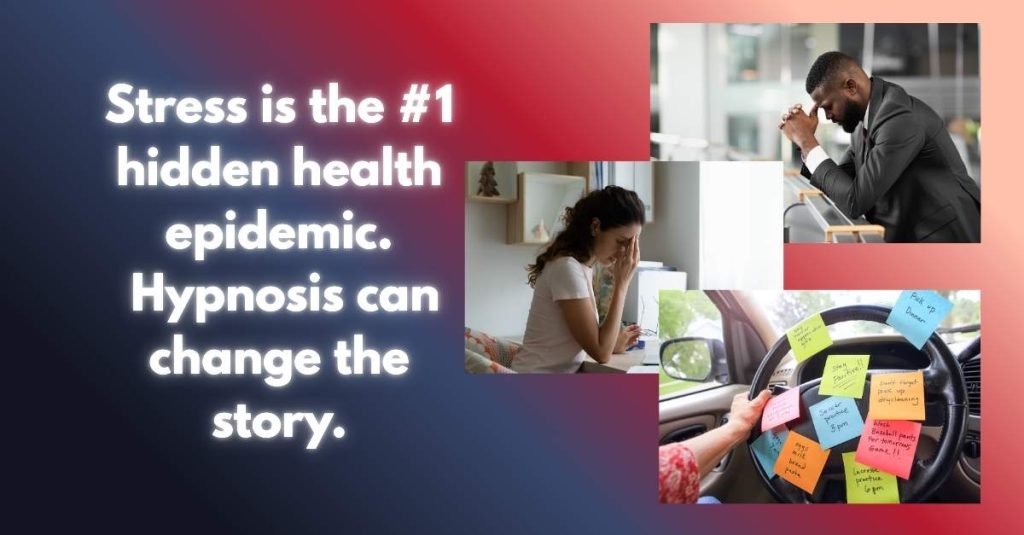
The Overlooked Epidemic: Stress
You don’t have to be in healthcare long to recognize a painful truth: most people who show up in a medical setting aren’t just sick, they’re stressed.
The CDC estimates that up to 90% of illness is stress-related. Meanwhile, research confirms that 60–80% of primary care visits are driven by stress-based symptoms—everything from digestive issues and fatigue to migraines, anxiety, and chronic pain.
And yet, stress still isn’t being addressed at its root. It’s managed. Suppressed. Occasionally discussed. Rarely cleared.
That’s why hypnosis is gaining ground in the health and wellness space, not as a gimmick, but as a credible, regulation-shifting tool. It’s finally being recognized for what it truly is: a bridge between body, mind, and lasting relief.
The Hypnosis Industry Is Booming for a Reason
The global hypnotherapy market is projected to grow from roughly $12 billion in 2023 to $131.5 billion by 2032, with a compound annual growth rate of over 30% (Polaris Market Research).
This exponential expansion reflects a new wave of demand—for self-directed healing, emotional regulation, and mind-body congruence.
But it also reflects a problem: the current healthcare model isn’t equipped to treat emotional stress at its core.
This is where hypnosis, done responsibly and professionally, becomes a referral-worthy option for providers on the front lines.
Why Stress Needs More Than Relaxation
Stress isn’t just “being overwhelmed.” Chronic stress is a physiological shift that hijacks the hypothalamic-pituitary-adrenal (HPA) axis, floods the body with cortisol, and wears down the immune system, digestion, and even cognition.
Clients in this state often experience:
- Physical symptoms without a clear diagnosis
- Emotional numbness or agitation
- Trouble sleeping, focusing, or “letting go”
- Constant overthinking, self-doubt, or a sense of inner pressure
- Habits they can’t break, even when they consciously want to
These are more than mindset issues. They are stress-encoded neural loops. And this is where hypnosis shines.
How Hypnosis Interrupts the Stress Loop
When someone is guided into a hypnotic state, their brain moves from beta (thinking, analyzing) into alpha and theta states where emotional memory, insight, and subconscious patterning become accessible.
This shift creates space for:
- Nervous system regulation: easing cortisol, activating parasympathetic calm
- Emotional release without retraumatization: accessing stored tension without needing to relive events
- Cognitive reframing that sticks: changing beliefs from the inside out, not just through logic
But perhaps most importantly, hypnosis helps people connect with themselves again, beneath the patterns, beyond the noise, at the level where true healing begins.
Not Just Scripts: Why Ethical Hypnosis Training Matters
Here’s the challenge: while hypnosis is gaining popularity, not all practitioners are trained equally.
Many new hypnotists rely on pre-written scripts or surface-level methods that don’t fully account for trauma, stress physiology, or the emotional intensity clients may bring.
And this is critical—because when healthcare providers refer, their reputation is on the line.
They need to trust that the practitioner:
- Can hold emotional space responsibly
- Understands professional boundaries and ethics
- Knows how to work with (not against) the client’s resistance
- Respects scope of practice and knows when to refer out
- Embodies calm, present, emotionally intelligent leadership
In other words, they’re not just referring to a modality.
They’re referring to you.
A Word from Experience: Why This Work Must Be Held with Care
As someone who comes from a healthcare background, I understand the weight of what it means to earn a provider’s trust.
Doctors, nurses, and specialists are overwhelmed. They need options they can count on—practitioners who can support the emotional root without crossing professional lines.
That’s why our training at Elite Hypno Pro is structured not just around “techniques,” but around three pillars:
Ethics and scope awareness – You’ll learn how to work in a way that supports and complements healthcare, not competes with it.
Emotional intelligence and presence – Our training sharpens your ability to read subtle cues, regulate your own nervous system, and guide sessions with intuitive attunement.
Utilization-based hypnosis – We teach you to work with what’s real for the client in the moment—not force a formula or rely on scripts.
This is how we prepare our students to be the kind of practitioner a doctor will gladly send someone to.
Stress-Based Mental Blocks: What They Really Are
Mental blocks don’t usually show up as “I think I’m stressed.”
They show up as:
“I’m not sure why I can’t move forward.”
“I second-guess everything.”
“I feel stuck even though I’m trying.”
“I don’t feel safe speaking up / showing up / being seen.”
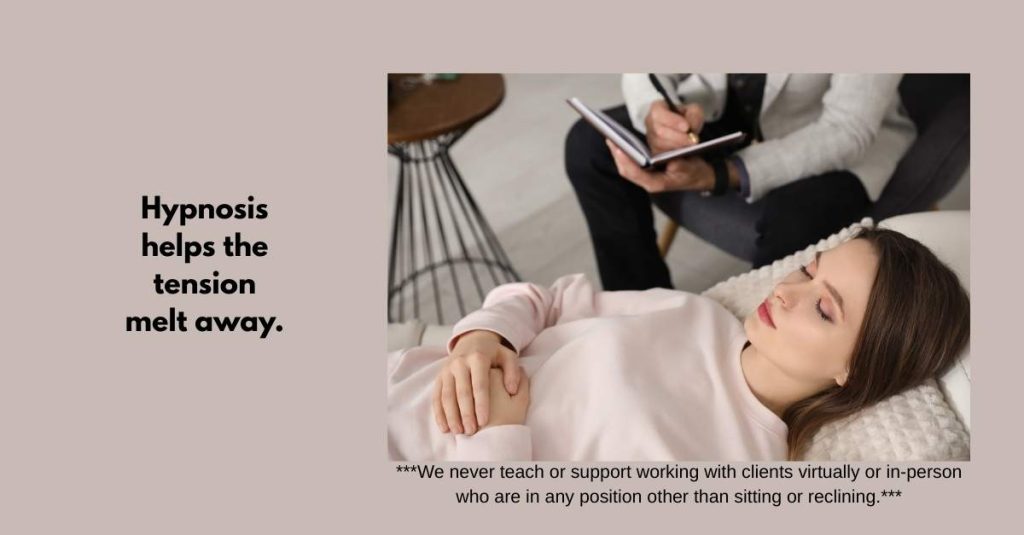
Hypnosis helps get under these patterns—not by force, but through connection. Through presence. Through safe access to emotional material that was previously frozen, tangled, or buried.
And once it’s released? The body relaxes. The mind opens. The nervous system finally exhales.
Hypnosis Can Support Real Healing, If It's Done Right
As the world becomes more overwhelmed, the demand for non-pharmaceutical, non-invasive, emotionally attuned healing methods will only grow.
Healthcare providers are already starting to recognize this. But they’re looking for partners who understand the weight of what they’re being trusted with.
If you’re already practicing hypnosis—or considering learning—it’s not enough to know what to do. You need to understand why it matters.
That’s what builds credibility.
That’s what creates safety.
That’s what keeps this work sacred.
The Role We’re Being Asked to Play
We’re in a cultural shift.
Stress is no longer just a background issue. It’s the main character in most people’s health story. And hypnosis, when practiced with integrity, is one of the most direct ways to change that story at the root.
If you feel called to guide others through that shift—ethically, skillfully, and with grounded confidence—this is your moment.
At Elite Hypno Pro, we don’t just teach hypnosis.
We teach you how to honor the power of it.
With your presence.
With your professionalism.
And with the kind of care that makes you referral-worthy in a world that desperately needs more of it.
Frequently Asked Questions
1. What makes training with Penny different?
Unlike many hypnosis trainings, Penny brings 25 years of experience as a nurse and nurse anesthetist working side by side with physicians, nurses, and healthcare providers. She understands what it means to earn a provider’s trust and how to create referral-worthy credibility. Her training combines ethical, process-based hypnosis with insights from neuroscience, stress physiology, and her years of collaboration in medical environments.
2. Do I need a healthcare background to succeed in hypnosis?
No. Most hypnotists start without medical training. What matters is learning how to work ethically, understand scope of practice, and create results that healthcare providers and clients alike can trust. Penny’s programs prepare you with that foundation.
3. How is hypnosis different from meditation or relaxation techniques?
Meditation and relaxation can calm the mind in the moment, but hypnosis creates a deeper shift in subconscious patterns. It helps rewire stress loops, change beliefs at the root, and create lasting results that simple relaxation often can’t achieve.
4. Why do healthcare providers refer to trained hypnotists?
Providers are overwhelmed with stress-related cases that don’t respond to medication alone. When they know a hypnotist has the training, ethics, and professionalism to handle emotional intensity responsibly, they see hypnosis as a valuable complement—not competition.
5. Can hypnosis really help with stress-based mental blocks?
Yes. Stress-based blocks often show up as overthinking, self-doubt, or feeling “stuck.” Hypnosis works at the subconscious level where these patterns are encoded, helping clients release them safely and experience relief that lasts.
Are you feeling called?
The people who do the greatest work in hypnosis fell pulled to step in and show people how life can be better. Get the details on the Elite Hypno Pro™ Training